
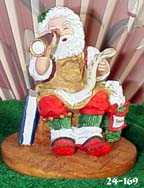
SANTA AND THE YOUNG ASTRONOMER
(For Young Enthusiasts and Those Who Know One...)
Got the Astronomy "bug"?... Hoping to get a Telescope for Christmas so you can jump-start your career as a Sky Observer? Getting your First Telescope is an exciting event that can be a turning-point in your life!
But wait! The telescope is NOT the starting point of your journey to the Stars, only an important milestone along the way. That First Telescope to come will unlock distant discoveries in space for you in a most exciting way IF choosing it and getting it are just part of your experiences as a budding astronomer.
First become a Sky Observer, then learn about Astronomy and Telescopes while you enjoy the Sky and learn to use stargazing tools that will become your friends for life. There will be plenty of time to choose a telescope over the next few months! Rushing to have one under this year's Christmas tree could result in disappointment. Most importantly don't obey the impulse to pick up a scope for $200.00 or less from a department store display shouting promises of 250 power or 600 power. Telescopes that can satisfy and nourish a lifetime interest are not found everywhere, and they are worth saving for.
You can become a Sky Observer on the next clear night. It starts with simply putting on a warm coat, hat and gloves and looking up from your back yard! Start right after sunset, observing what cloud patterns are present and forming an opinion about how clear the coming dark skies will be for Astronomy. Being aware of what is over your head even when the stars are not out is important to a Sky Observer. Go in and come back out in 45 minutes. Scan the skies, especially low in the West, to see what stars may have come out. Do they twinkle or are they steady? Be ready to be surprised when you look at the Sky. Look again when it is fully dark. The dazzling Venus, or a shooting star, or a dazzling display of the Northern Lights, or something totally unexpected may reward your ready eyes! (More on Sky Observing...)
Look up every chance you get and you are already a Sky Observer! Check the Sky before you go to bed and when you get up before the Sun on Winter mornings. Read Astronomy Magazines. Look for books for beginning astronomers in your local library or bookstore. Go to "Star Parties" organized by your local Astronomy Club. There you will find experienced Astronomers with a variety of Telescopes who will enjoy letting you look and explaining the fine points to you.
I mentioned other stargazing tools. These include rotating star finders or "planispheres", and red flashlights. A planisphere, or the monthly star chart in one of the magazines mentioned above, will introduce you to the "Constellations" that form the framework of the sky, and show their changing positions from season to season. The red flashlight lets you look at your star finder without dazzling your eyes and losing your ability to see the stars.
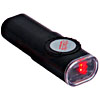
You can make your ordinary flashlight "red" by putting it in a brown paper bag, or by covering it with two or more layers of red cellophane or red-nail polish. But the kindest flashlights to dark-adapted eyes are specially made with red "L.E.D.'s (Light Emitting Diodes).
Another helpful web site is Sky News Magazine. It lists excellent books on the Sky by Terence Dickinson, one of the best authors for Backyard Astronomers. It also has a red L.E.D. flashlight.
My favorite observing tool is my pair of binoculars! Even when I have my telescope set up I scan the patch of sky containing my intended target with binoculars first. It is then quick and enjoyable to "zoom into" that area and see the target object with the scope. A great many sky objects marked on star charts are more visible in binoculars, and many look better than in a scope! Use binoculars for several months before buying a telescope and you will have a big head start in opening up the riches of the sky to its powerful gaze.
In these few paragraphs I have suggested ways of becoming an avid Sky Observer which will keep you busy for months (If not years!). When you do get a telescope you will use it with skill and satisfaction that would not at first have been possible, and every night you take it out it will reward you with fresh discoveries!
Return to the Beginners Page
The Springfield Telescope Makers provide information and links to various astronomical vendors for the convenience of our readers but does not endorse any individual vendor.